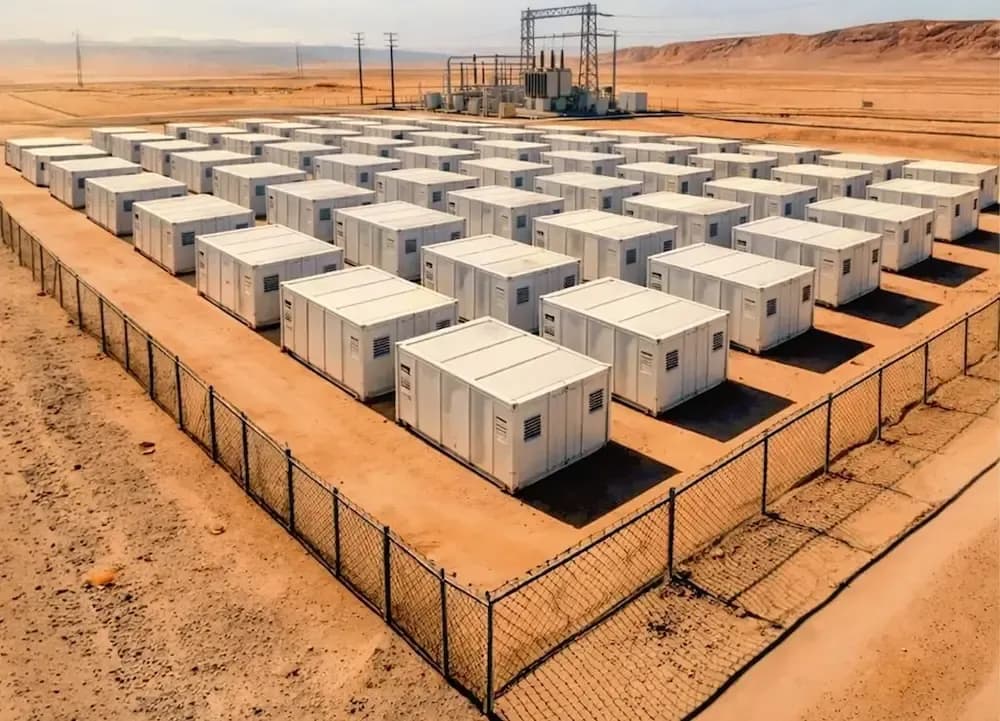
Curtailment Management
Every megawatt-hour a grid operator tells a solar farm not to produce is clean energy thrown away and revenue never earned. Curtailment management is the discipline of catching that energy before it is lost, and it is decided in milliseconds, by software.
Curtailment is the deliberate reduction of renewable generation below what the sun or wind would allow, ordered or incentivised by the grid because the electricity cannot be used or carried at that moment. For the generator, it is a direct loss: energy that was free to produce, and would have earned revenue, is simply not produced. As renewable penetration rises, curtailment is climbing with it, and managing it has become one of the defining challenges of operating renewable assets profitably.
This guide explains what causes curtailment, the difference between its two forms, why it is growing, and how it is managed — with particular attention to the part most coverage skips: the real-time signal processing that decides whether a curtailment event becomes lost revenue or stored value. Because the fastest and most flexible way to catch curtailed energy is to store it, the control layer that reads the grid's signals and directs that energy is where curtailment management is actually won or lost.
What Causes Curtailment: Congestion and Oversupply
Curtailment has two root causes, and the distinction matters because they call for different responses.
Congestion.The transmission network has a finite capacity to carry power. When renewable generators, often sited in remote, wind-rich or sun-rich areas far from demand, produce more than the local lines can evacuate, the grid orders output reduced to prevent overloading the network. The energy exists and is wanted elsewhere, but the wires physically cannot deliver it. Congestion curtailment is a grid-topology problem, and it concentrates exactly where renewable build-out has outpaced transmission.
Oversupply.At times of high generation and low demand — a sunny, mild midday, or a windy night — total renewable output can exceed total electricity demand. With more supply than the system can absorb, and limited places to put the excess, the grid curtails generation to keep supply and demand balanced. This is the mechanism behind the so-called duck curve, where a midday solar surge collides with modest daytime demand and forces either curtailment or very low, sometimes negative, prices.
Both causes are worsening for the same underlying reason: renewable capacity is being added faster than the transmission and flexibility needed to absorb it. In California, the grid operator curtailed 3.4 million megawatt-hours of utility-scale wind and solar in 2024, a 29% increase on the previous year, with solar alone accounting for 93% of the total. Monthly curtailment records keep being broken. Across Europe, curtailment volumes are projected to rise steeply through the rest of the decade as solar and wind shares climb. Every one of those megawatt-hours is clean energy generated and then discarded.
The Two Kinds of Curtailment Signal: Economic and Directed
How a generator experiences curtailment depends on which of two mechanisms the market uses, and a capable operation has to handle both.
Economic curtailmentworks through price. When oversupply drives wholesale prices very low or negative, it stops making financial sense to generate, and a generator reduces output in response to the price signal. This is voluntary in form — the generator chooses — but the economics do the compelling. Negative prices are effectively the market paying storage to absorb energy, a dynamic closely tied to energy arbitrage, where the same low-price hours become charging opportunities.
Directed curtailmentis an explicit instruction. The grid operator sends a signal ordering a plant to reduce output to a specified level, and the plant must comply, typically within a short, defined window, to protect grid stability. This is not a price nudge but a command, and it can arrive with little warning. A wind or solar plant receiving a directed-curtailment signal has moments, not minutes, to decide what to do with the energy it can no longer export.
The critical realisation is that directed curtailment does not have to mean wasted energy. The instruction is to stop exporting to the grid, not to stop generating. If the plant has co-located storage and a control system fast enough to react, the energy that cannot be exported can instead be captured in the battery, held, and dispatched later when the grid can accept it and prices have recovered. Whether that happens comes down entirely to how quickly and intelligently the curtailment signal is processed.
How Curtailment Is Managed: The Solution Stack
There is no single fix for curtailment. It is addressed through a stack of measures operating at different scales and timeframes, and storage sits at the centre of the ones an asset owner can actually control.
1.Transmission expansion.Building more and stronger lines relieves congestion by letting energy flow from generation-rich areas to demand centres. It is the most fundamental fix, but also the slowest and most expensive, with new lines taking many years to permit and build — far too slow to address curtailment happening today.
2.Battery storage.Storage is the fastest-deployable and most directly controllable answer. By absorbing surplus generation the moment it would otherwise be curtailed and releasing it when the grid can accept it, a battery converts wasted energy into a time-shifted, revenue-earning resource. It addresses both causes: it relieves local oversupply and, behind a congested connection, lets a plant keep generating into storage rather than spilling energy.
3.Demand response and flexible loads.Shifting consumption toward periods of surplus — through time-of-use pricing, smart EV charging, industrial demand response, or flexible loads such as data centres — raises demand exactly when curtailment threatens, absorbing energy that would otherwise be spilled.
4.Forecasting and dispatch optimisation.Software that predicts generation, demand, and price, and optimises dispatch against them, is increasingly essential. Anticipating when curtailment is likely lets an operator position storage to catch it, turning a reactive scramble into a planned capture.
Storage and smart dispatch software are the two elements of this stack that an individual asset owner can deploy on their own timeline, without waiting for grid-scale infrastructure. They are also the two that work together: the battery provides the physical capacity to absorb curtailed energy, and the control layer provides the intelligence to know when and how to use it. The role storage plays in firming variable renewables is covered more broadly in the guide to grid-forming BESS.
The Part Most Coverage Misses: Curtailment Is a Signal-Processing Problem
Almost every discussion of curtailment describes storage as a passive sponge that soaks up excess energy. That framing hides the actual difficulty. A battery does not absorb curtailed energy automatically; something has to recognise the curtailment event as it happens, decide that capturing the energy is the right move, and command the battery to do it — all within the window the grid allows. That something is the energy management system, and curtailment management is, at its core, a signal-processing and decision problem it solves in real time.
Consider what has to happen in the seconds after a directed-curtailment signal arrives. The control system has to receive and interpret the operator's instruction, establish how much energy is about to be spilled, check the battery's available headroom and state of charge, confirm that capturing now serves the asset's overall strategy rather than conflicting with a committed obligation, and then modulate generation and storage so that the exported power drops to the ordered level while the surplus flows into the battery instead of being lost. Advanced control platforms process curtailment signals from the grid operator within milliseconds and redirect the excess energy to storage in that same window. A system too slow to react, or unable to interpret the signal, simply spills the energy — the plant curtails, and the revenue evaporates.
This is why curtailment capture is a control capability before it is a hardware one. Two identical batteries behind the same solar farm will recover very different amounts of curtailed energy depending on the intelligence of the layer that operates them. The faster and more context-aware the control system, the more of each curtailment event it converts into stored value. The same shared-connection logic that governs how much a plant can export and store is explored in the guide to co-located solar, wind, and storage, where curtailment capture is one of the central economic drivers.
Why Catching Curtailment Pays
The case for managing curtailment well is straightforward once the energy is understood as recoverable rather than lost. Every megawatt-hour caught in storage instead of spilled is a megawatt-hour that can be sold later, often at a materially higher price, because curtailment happens during surplus and low prices while the stored energy is discharged into scarcity and high prices. The value captured is not just the recovered energy but the price spread between the moment of curtailment and the moment of discharge.
There is a sustainability dimension that increasingly carries financial weight. Curtailed renewable energy is clean generation wasted, and a plant that captures rather than spills it improves its effective utilisation and lowers the carbon intensity of the energy it ultimately delivers — a relationship explored in the guide to the battery storage carbon footprint. As reporting requirements tighten, demonstrating high renewable utilisation and low waste is becoming part of a project's environmental credentials, not only its economics.
Finally, curtailment capture strengthens the investment case for co-located storage. The additional revenue from recovered energy is one of the value streams that makes pairing a battery with a renewable plant attractive, and it stacks with arbitrage, grid services, and capacity value. An asset that reliably converts curtailment into stored energy is both more profitable and more bankable, the same lifecycle-value logic that runs through maximising energy storage efficiency.
Frequently Asked Questions
What is curtailment in renewable energy?
Curtailment is the deliberate reduction of renewable generation below what conditions would allow, ordered or incentivised by the grid because the electricity cannot be carried or used at that moment. It happens for two main reasons: transmission congestion, when lines cannot evacuate the power, and oversupply, when generation exceeds demand. For the generator it means lost energy and lost revenue, and it rises as renewable penetration grows.
What is the difference between economic and directed curtailment?
Economic curtailment works through price: when oversupply pushes wholesale prices very low or negative, generating no longer makes financial sense and output falls in response. Directed curtailment is an explicit instruction from the grid operator ordering a plant to reduce output to a set level, usually within a short window, to protect grid stability. Economic curtailment is a market signal the generator responds to; directed curtailment is a command it must obey.
How does battery storage reduce curtailment?
A battery absorbs surplus generation the moment it would otherwise be curtailed and releases it later when the grid can accept it and prices have recovered. Behind a congested connection, this lets a plant keep generating into storage rather than spilling energy; during oversupply, it relieves the imbalance by soaking up excess. Capturing curtailed energy requires a control system fast enough to recognise the curtailment event and direct the energy to the battery within the window the grid allows.
Can curtailed energy be recovered?
Yes, if the plant has storage and a fast enough control system. A directed-curtailment signal orders a plant to stop exporting to the grid, not to stop generating. If co-located storage has available headroom and the control layer processes the signal quickly, the energy that cannot be exported is captured in the battery and dispatched later. Without that fast control response, the energy is simply spilled and the revenue is lost.
Why is curtailment increasing?
Curtailment is rising because renewable capacity is being added faster than the transmission and flexibility needed to absorb it. California's grid operator curtailed 3.4 million megawatt-hours in 2024, up 29% on the prior year, and European curtailment is forecast to climb steeply through the decade. As solar and wind shares grow, both congestion and oversupply events become more frequent, making curtailment management increasingly central to renewable project economics.
Managing Curtailment in Practice: What to Get Right
For an operator deciding how to protect a renewable asset against curtailment, the priorities follow directly from how curtailment actually works. Storage provides the physical means to catch surplus energy, but the capture rate — how much of each curtailment event is actually saved rather than spilled — is set by the control layer, so the specification of that layer deserves as much attention as the battery itself.
Three capabilities separate a control system that captures curtailment from one that merely watches it happen. It must process grid-operator curtailment signals in real time, on a millisecond rather than second timescale, because the window to redirect energy is short. It must be able to interpret both economic and directed curtailment and respond appropriately to each, treating a price collapse and a direct instruction as different situations. And it must manage the capture in the context of the asset's other obligations, so that catching curtailed energy does not compromise a committed grid-service reserve or leave no room for a higher-value opportunity.
This is precisely the problem PowerKonnekt's control layer is built to solve. The platform processes curtailment and grid signals on a20-millisecond control loop, coordinating generation and storage so that energy which would be spilled is instead directed into the battery, and its forecasting suite anticipates curtailment conditions so capture is planned rather than reactive. Because the platform is hardware-agnostic, it applies this across whatever generation and storage a project combines, and because it manages the full portfolio of an asset's obligations at once, curtailment capture is balanced against every other value stream rather than pursued blindly.